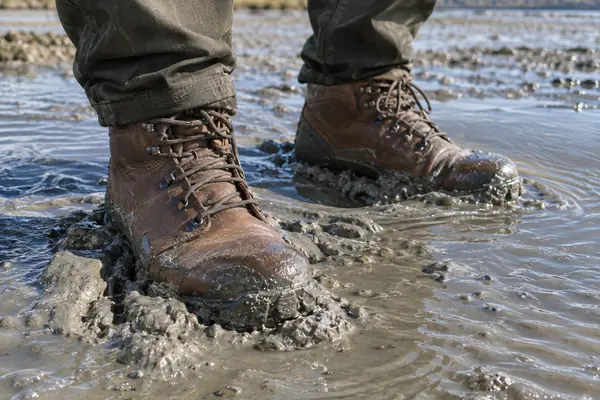
THE SCIENCE
Too dense to drown in
Quicksand has a density of about 2 grams per millilitre, roughly twice that of a person. A study in Nature found you would sink to about the waist, but no further.
See the numbers doodlequick
WHAT THE SCIENCE AND COASTGUARD SAY
Quicksand will not swallow you. It will hold on.
Check a move
CALL 999ask for the Coastguard
Physicists found that quicksand is about twice as dense as the human body, so you cannot sink all the way under. But once disturbed it packs tight around your legs, and on the coast an incoming tide turns being stuck into an emergency.
At a glance
≈ 2× denser
Quicksand compared with the human body
Quicksand has a density of about 2 grams per millilitre and the human body about 1. That is why researchers concluded a person cannot be drawn completely under.
DENSITY · NATURE STUDY, 2005
≈ 10,000 N
Needed to pull a trapped foot free
The researchers estimated the force to extract a foot at a centimetre a second at about ten thousand newtons, similar to lifting a family car.
FORCE · NATURE STUDY, 2005
TWO NUMBERS WORTH KNOWING
One figure on why you float,
one on why you stay put.
Real coastal mud can behave differently from laboratory quicksand. HM Coastguard reports an angler who, after an hour of trying to get free, had sunk to just above his chest as the tide came in.
A QUICK SAFETY CHECK
Pick a reaction to see what the science and HM Coastguard say about it. The bar shows how risky it is.
Based on HM Coastguard safety advice and a 2005 study of quicksand published in Nature, as reported by National Geographic.
THE SHORT ANSWER
The film version gets it backwards.
The real risks are the grip and the tide.
THE SCIENCE
Quicksand has a density of about 2 grams per millilitre, roughly twice that of a person. A study in Nature found you would sink to about the waist, but no further.
See the numbersTHE GRIP
Disturbing quicksand makes it runny, so you sink, then the sand settles into a dense, stodgy layer packed around your legs. Pulling against it takes enormous force.
How it worksTHE TIDE
Quicksand and soft mud are mostly found near the sea. If you are stuck when the tide comes in, you could drown, so call 999 and ask for the Coastguard straight away.
Check a move
FOUR HABITS FOR THE COAST
HM Coastguard teams carry out mud rescues often, including for people who know the coast well. These habits come from their advice.
Look up tide times and the forecast before you go, and leave extra time in case.
Follow local signs. The area between the tides can hide pockets of soft mud you will not see until you are stuck.
Walking through mud and estuaries risks hidden channels of fast-flowing water as well as soft ground.
If you or someone else gets stuck, call 999 and ask for the Coastguard straight away.
HOW QUICKSAND WORKS
Quicksand is fine sand, clay and salt water. At rest the grains sit in a loose structure, like a house of cards, with water-filled gaps held together by clay. Stepping on it turns the clay runny, and the structure collapses.
The salt then makes clay particles clump and settle with the sand, leaving a stodgy layer about twice as dense as before, packed around whatever sank into it. That is the grip you feel.
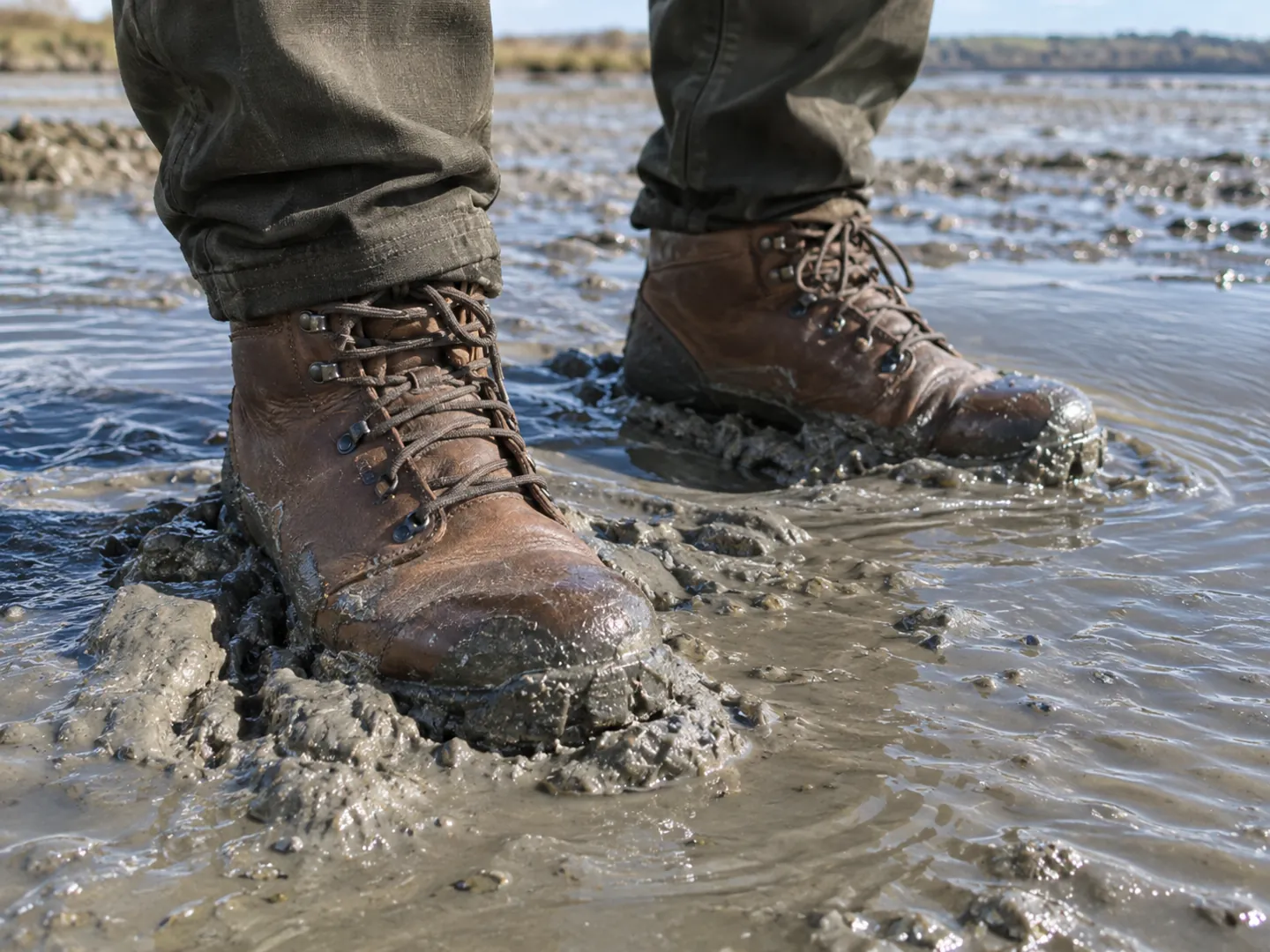
Questions
No. Research published in Nature in 2005 found quicksand is about twice as dense as a person, so you would sink to around waist depth but not further. Soft coastal mud can still trap you deeply.
Once disturbed, the sand settles into a dense layer around your legs. Researchers estimated that pulling a foot out at a centimetre a second needs force similar to lifting a car.
HM Coastguard says to stay calm, spread your weight as much as possible and avoid moving. Call 999 and ask for the Coastguard.
No. The Coastguard advises discouraging others from helping, because without the right equipment they could get stuck too. Its rescue teams train specially for mud rescues.
Parts of the UK coastline, including beaches, can have soft ground such as mud or quicksand, especially around low-lying water, tidal areas and estuaries. Check local warning signs.
Sources
ABOUT THIS NAME
doodlequick.com is part of the DoodleSale portfolio. It isn't in an auction right now, but you can ask about leasing it.